Commercial Waste Hemel Hempstead: Building an Eco-Friendly Waste Disposal Area
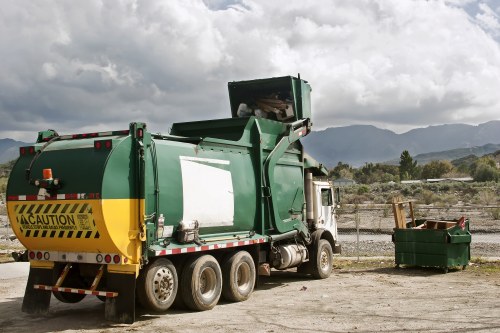 Commercial Waste Hemel Hempstead is committed to expanding a resilient, eco-friendly waste disposal area infrastructure across the town and surrounding boroughs. Our approach combines practical on-the-ground recycling activity with a clear sustainability vision: a measurable recycling percentage target, partnerships with local charities, and investments in low-carbon vans to reduce transport emissions. This page explains how we support a sustainable rubbish area for businesses, landlords and property managers while aligning with the boroughs' approach to waste separation and circular economy goals.
We work in close collaboration with municipal teams and commercial clients to implement the boroughs' waste separation schemes — from segregating paper and cardboard, glass and mixed plastics, to food waste and construction materials. Separation at source remains the single most effective measure to increase recovery rates, and our consultants help set up pragmatic collections that fit operational schedules and local bylaws.
Recycling Targets and Reporting
Our immediate target is a 60% recycling rate for all commercial collections within Hemel Hempstead within the next three years, moving progressively toward higher thresholds. This recycling percentage target is ambitious but realistic: it balances existing kerbside and transfer station capacities with investment in sorting and processing. We provide quarterly reports for clients to show diversion rates and carbon savings, and we track materials by category so you can see exactly how your waste contributes to a healthier local environment.
Local Transfer Stations and Sustainable Logistics
Local transfer stations act as hubs for our sustainable rubbish area model. By consolidating loads at nearby transfer sites, we reduce vehicle miles and improve the efficiency of onward movements to reprocessors. We coordinate with accepted transfer facilities across Dacorum and neighbouring districts to ensure that mixed commercial loads are pre-sorted and routed to the best available recycling streams — whether that's anaerobic digestion for food waste, specialist e-waste recyclers, or aggregates reprocessors for construction waste.

To support low-carbon logistics, our fleet includes low-carbon vans and smaller electric vehicles where routes permit. These vehicles are used for last-mile collections, on-site audits and dual-stream pickups that keep recyclable materials separate. By combining electric vehicles with smarter route planning and transfer station consolidation, we reduce emissions per tonne of waste handled — an essential part of creating a greener commercial waste Hemel Hempstead.
Examples of recycling activity we support locally include:
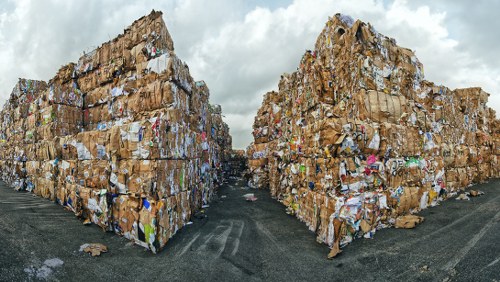
- Paper & Cardboard: separated at the point of disposal to ensure high-quality bale streams for local paper mills.
- Glass & Plastics: containerised collections and glass-only loads to avoid contamination.
- Food Waste: segregated collections to biogas and composting facilities via borough food waste programmes.
- Construction & Demolition: material recovery for aggregates and metals.
- Electrical & Hazardous: specialist e-waste routes and secure handling for WEEE and batteries.
Partnerships with Charities and Local Social Enterprises
 We actively partner with local charities and social enterprises to maximise reuse and community benefit. Items in good condition ─ furniture, textiles and office equipment ─ are diverted to charity shops and skills programmes. These partnerships not only extend product life cycles but also support local employment and training initiatives, converting what would otherwise be commercial waste into community resources.
The collaboration model includes formal donation pathways, scheduled collections for bulky items destined for reuse, and joint campaigns during business clear-outs. We provide clear segregation instructions so that reusable goods are not mistakenly sent for processing. This model strengthens the sustainable rubbish area concept by embedding social value into commercial recycling flows.
Operational Principles: our service is built on three practical principles that reflect the boroughs' approach to waste separation and commercial disposal:
- Segregate early — make separation simple for staff with clearly labelled containers.
- Optimise transport — use transfer stations and low-carbon vans to reduce miles and emissions.
- Maximise reuse — channel reusable items to charities and social enterprises.
How We Measure Success
Success for our eco-friendly waste disposal area strategy is measured by diversion rates, carbon intensity (kg CO2e per tonne), and social value generated through charity partnerships. We monitor contamination levels and provide training and signage to help businesses comply with the boroughs' separation standards. Continuous improvement cycles drive recycling rates up, contamination down, and operating costs closer to sustainability targets.
By aligning Commercial Waste Hemel Hempstead with municipal procurement strategies and local reprocessors, we create reliable markets for recovered materials. That market stability is crucial for local recycling markets to flourish, ensuring recycled goods can be efficiently remanufactured or repurposed within the UK where possible.
In sum, our model transforms commercial waste into an asset: a managed, transparent, eco-friendly waste disposal area that meets regulatory expectations, supports local charities, and moves Hemel Hempstead towards a resilient, sustainable rubbish area for businesses and communities alike.
